Are you torn between Huntsville and Madison and wondering which neighborhood will truly fit your family? You are not alone. Families often juggle schools, commute time, parks, and home style while trying to stay on budget. This guide gives you a simple way to compare areas across Huntsville and Madison, understand local trade-offs, and build a short list that fits your life. Let’s dive in.
Start with your top priorities
Before you look at homes, decide what matters most for your daily life.
- Rank key factors: school assignment, max commute time, yard size, access to parks, neighborhood feel, and budget.
- Choose your non-negotiables vs nice-to-haves.
- Set a price range and get pre-approved so you can compare real options.
A clear list helps you quickly rule out areas that will not work and focus on neighborhoods that will.
Understand school zones and options
In our area, three systems serve most families: Madison City Schools, Huntsville City Schools, and Madison County Schools. School assignment depends on school zone boundaries, not just city limits. Always verify the assigned schools for a specific address with the district lookup tools and by reviewing official resources.
- Review performance metrics on the state’s site using the Alabama school report cards. Look at test results, graduation rates, and program offerings.
- Check district pages for enrollment and programs at Madison City Schools and Huntsville City Schools.
- Ask about capacity, rezoning proposals, and transfer policies. Zoned schools can shift as growth occurs.
School zones often influence demand and resale value. Expect to see price differentials between zones, and verify the assignment for each property you tour.
Commute patterns and major employers
Daily drive time shapes family routines. The largest employment hubs include Cummings Research Park, Redstone Arsenal, and downtown Huntsville. Main routes include I-565 and the US 72 and US 231 corridors. Public transit is limited, so most households drive.
- Test-drive your route during rush hour. Check inbound and reverse commutes.
- Map alternate routes to the office, childcare, and after-school activities.
- If one partner works at Research Park and the other at the Arsenal, prioritize neighborhoods that reduce total drive time for both.
Shorter, predictable commutes can be just as valuable as an extra bedroom.
Parks, trails, and family amenities
Outdoor access is a major perk in Huntsville and Madison. You will find large regional parks, greenway systems, neighborhood playgrounds, and waterfront recreation.
- Explore the trails and views at Monte Sano State Park.
- Visit the Huntsville Botanical Garden for year-round family events and education.
- Check how close a neighborhood is to playgrounds, youth sports fields, pools, and library branches.
Proximity to parks, Big Spring International Park downtown, and community centers adds real, daily value for families.
Safety and neighborhood feel
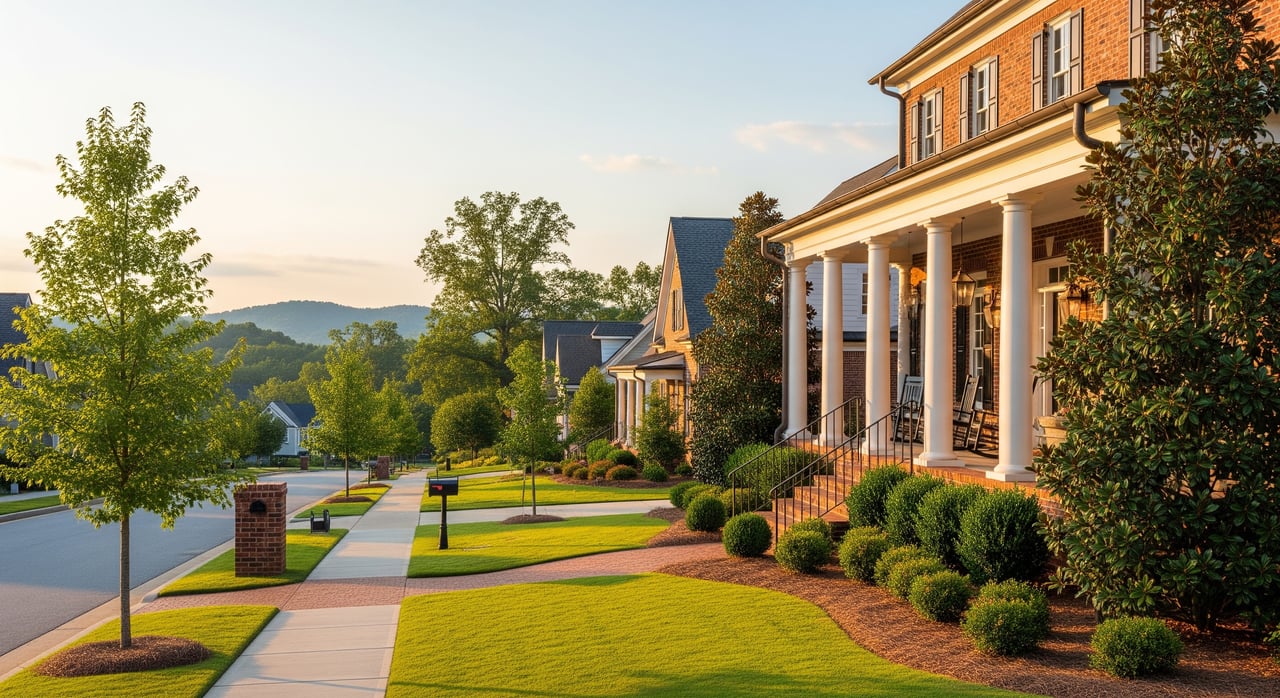
Comfort in your surroundings matters. Look for sidewalks, street lighting, traffic calming, and general upkeep. Review public crime data from local departments and visit at different times of day to observe activity.
- For city data and updates, check the Huntsville Police Department.
- Talk with neighbors about traffic near schools and school dismissal patterns.
Combine data with on-the-ground visits to form a clear picture of neighborhood character.
Home types and trade-offs
You will see a wide range of housing styles across Huntsville and Madison. Each comes with different maintenance, cost, and lifestyle factors.
- Historic or older urban neighborhoods: smaller lots and homes with character near downtown. Expect possible renovation needs and smaller yards.
- Suburban subdivisions and master-planned communities: newer construction, larger lots, and community amenities through HOAs. Review HOA rules and fees.
- Mountain or wooded properties: scenic settings on Monte Sano or in Hampton Cove, often with slopes and special drainage considerations.
- Townhomes and condos: lower maintenance and sometimes closer to employers, with HOA oversight.
Ask about year built, roof and HVAC age, energy efficiency upgrades, and lot slope. Read HOA documents before you make an offer.
Budget, taxes, and what drives prices
Your total monthly cost includes mortgage, property taxes, insurance, and HOA fees if applicable. Alabama property taxes are often lower than many other states, but exact amounts vary by municipality and taxing district.
- Expect premiums for certain school zones, proximity to Research Park or Redstone Arsenal, views, and new construction.
- Compare price per square foot for similar homes to understand relative value.
- Ask your agent for recent neighborhood sales, days on market, and current inventory to gauge competition.
Understanding these drivers will help you target areas that match both your lifestyle and your budget.
How to read local market data
Market metrics help you compare neighborhoods in a meaningful way.
- Median sale price: useful for trend direction but sensitive to the mix of homes sold.
- Price per square foot: helpful when comparing similar homes in different areas.
- Days on market: lower numbers suggest stronger demand or sharper pricing.
- Months of inventory: under 3 months points to a seller’s market, 4 to 6 is more balanced, and over 6 favors buyers.
- Sale-to-list price ratio: shows how close sellers get to asking price and where bidding pressure exists.
Citywide averages can hide neighborhood differences. For example, Madison City School zones often show higher median prices, while many Huntsville neighborhoods near Research Park or Monte Sano also command premiums. Focus on neighborhood-level stats from local MLS reports when you compare.
Shortlist neighborhoods by priority
Use these examples as a starting point. Always confirm school zones, boundaries, and commute times for specific addresses.
School-focused buyers
Families who want zones with higher performance metrics often look at parts of the city of Madison that feed into Madison City Schools. Expect newer subdivisions, neighborhood pools and parks, and strong demand. Trade-offs can include higher purchase prices and moderate commute times depending on the workplace.
Short commutes to major employers
If you want to reduce drive time to Cummings Research Park, Redstone Arsenal, or downtown, consider areas east and southeast of Research Park, parts of south Huntsville, and central neighborhoods with quick access to I-565. You will find varied home ages, from mid-century ranch to newer infill. Some older homes may need updates.
Outdoor lifestyle and larger lots
Monte Sano, Hampton Cove, river-adjacent areas, and parts of outer Madison County offer bigger lots, trail access, and scenic views. You may see higher per-lot maintenance and longer drives to some employers. Sidewalks and nearby retail can be limited in rural spots.
Walkability and historic character
Five Points, Twickenham, and downtown-adjacent neighborhoods offer walkable streets and historic homes with character. Yards are smaller and parking can be tighter. Homes may need renovations, and school-zone advantages vary by address.
New construction and planned communities
West Huntsville and select parts of Madison include master-planned communities with pools, playgrounds, and builder warranties. Expect HOA fees and rules. Styles can be similar across lots, and construction may continue for some time as the community builds out.
A practical step-by-step plan
Use this checklist to go from broad search to the right neighborhood fit.
- Define and rank your priorities
- List your top five needs such as schools, commute, yard size, budget, and home style. Mark two as non-negotiable.
- Map your commute and daily routes
- Test the drive to work during peak times. Time after-school routes to childcare, grocery, and sports fields.
- Verify schools and programs
- Confirm the exact school assignment for any address using district tools and check Alabama school report cards. Review district updates at Madison City Schools and Huntsville City Schools for capacity and rezoning news.
- Evaluate local market indicators
- Ask for neighborhood-level MLS stats: recent sales, days on market, and months of inventory. Discuss pre-approval strength and offer timing if competition is high.
- Visit at different times
- Go during morning rush, school dismissal, and weekend hours to assess noise, traffic, and activity. Talk with neighbors about their experience.
- Consider insurance and hazard risks
- Ask about tornado-safe rooms or shelters, check floodplain status for river-adjacent properties, and price homeowner’s insurance for the area. Termite inspections are common in Alabama.
- Review HOA and future plans
- Read HOA covenants and budgets. Check city planning pages for road upgrades, rezoning, and trail projects that may affect traffic or amenities. The City of Huntsville Planning Department publishes maps and plan updates.
- Line up inspections
- Order a general home inspection plus roof, HVAC, and termite inspections. Consider moisture and foundation specialists if the lot is sloped or soil conditions warrant it.
Keep an eye on the long and short term
Short-term data like monthly inventory and days on market show immediate buyer pressure and seasonality. Long-term signals include multi-year price trends, job growth tied to Research Park and the Arsenal, and planned infrastructure such as new schools or road projects. Balance both views to make a confident choice that works now and supports your resale goals later.
Ready when you are
Choosing the right neighborhood in Huntsville or Madison comes down to matching your daily life with the realities of school zones, commute patterns, parks, and home types. With a clear plan and local data, you can narrow to a few great-fit areas and move forward with confidence. If you want help mapping trade-offs, confirming school zones, and timing the market, connect with Kenyala Hicks for local guidance and a smooth path to your next home.
FAQs
How do school zones affect home prices in Huntsville and Madison?
- School zones often influence demand and pricing. Addresses in zones with higher performance metrics on state report cards can see price premiums. Always verify the exact school assignment for each property.
What are the main commute considerations near Research Park and Redstone Arsenal?
- Most households drive. Test commute times to Cummings Research Park and Redstone Arsenal during peak hours and look for alternate routes along I-565 and major corridors.
Where can my family find strong outdoor access in the Huntsville area?
- Popular options include Monte Sano State Park, greenway trails, neighborhood parks, and the Huntsville Botanical Garden. Check how far these are from your target neighborhood.
How should I compare older homes to new construction?
- New construction offers modern layouts and lower immediate maintenance, often with HOA amenities. Older homes may have character and closer-in locations but can need updates. Factor HOA fees, inspection results, and renovation costs.
What market metrics help me compare neighborhoods?
- Focus on neighborhood-level median sale price, price per square foot, days on market, months of inventory, and sale-to-list ratio. Citywide averages can mask important differences.
Where can I find reliable information on safety and local planning?
- Start with city departments such as the Huntsville Police Department and the City of Huntsville Planning Department. Combine public data with visits at different times of day for context.